COMMERCIAL BOARDWALK / FIELD RESOURCE
Specify the complete boardwalk surface
Make species, machining, attachment, interfaces and operational responsibilities reviewable in one coordinated package.
Updated
Build a project planning summary ↗
05 / PERFORMANCE RISKS
Look below the finish.
These are review prompts, not a diagnosis of the visualized project.
Ventilation
Keep the intended air path reviewable, including enclosed edges, planting and later additions.
THE COORDINATION PLAN
Every interruption
needs its own detail.
Select a condition, identify the documents it needs, and record the question at its actual project location.
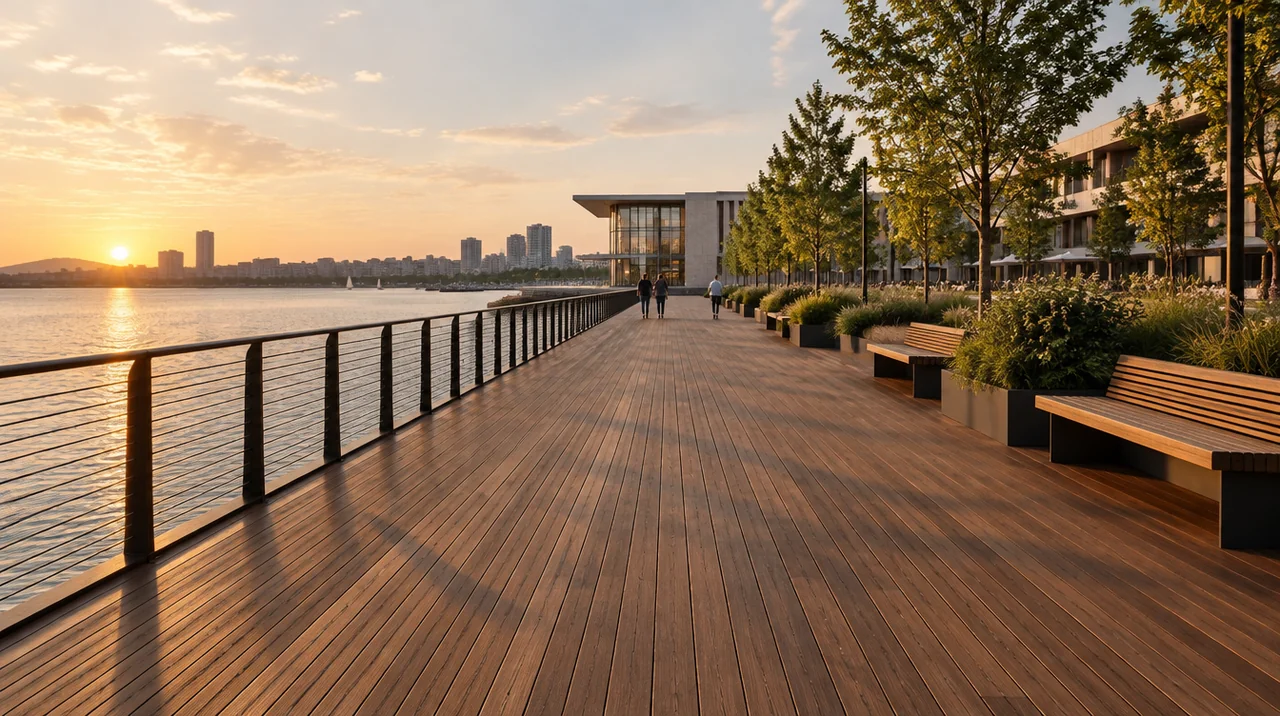
CONDITION 1 / 10
Field decking
Which supplied board and connection make up the walking surface?
Resolve in the project record
- Identify the actual board section, profile and supplied condition.
- Tie the exact fastening system to the supplied board and support.
- Keep the installation detail and the field-board removal method together.
Keep together
Board drawing + accessory instructions + accepted field detail
Consider the next intervention
Can one field board be inspected or replaced without an unplanned closure of adjacent work?
Review the boardwalk connection ↗Record locations and open questions 0 / 24 added
Use a separate entry for each actual location. Notes are temporary until exported or carried to the planner. Enter document identifiers, not confidential contents; no source files are uploaded.
Carrying a review uses temporary storage in this tab. It does not send an inquiry or change any project approval.
Begin with the owner’s operating brief
A commercial boardwalk specification needs a place to start: what the route connects, who uses it and how the owner expects to maintain it. A waterfront promenade with seasonal events has a different operating brief from a quiet viewing platform. Record those uses by segment before making one decking schedule serve the entire project.
Identify the people who can resolve each question. The surface supplier can document the offered boards and accessories. The responsible designers coordinate the structure, route geometry and interfaces. The owner supplies operating constraints and receives the maintenance record. A document that leaves these responsibilities unstated can contain detailed product language and still be difficult to build or maintain.
Describe the supplied board, not just the species
Give each board type a schedule identifier. Record its species documentation, actual section, length requirements, drying condition, grade description, face treatment and edge profile. Reference the profile drawing by number and revision. Distinguish a required dimension from an illustrative nominal size; an offer described only as “Ipe decking” is not a complete product schedule.
State where each board type is used. Field boards, perimeter pieces, removable panels and transitions may require different machining or attachment review. Keep those differences visible in the schedule instead of expecting installers to infer them from the overall plan. Do not derive a groove dimension, connection fit or available length from a concept image.
The acceptable appearance should also have a review basis. Identify the physical sample or mockup and the intended finish or natural-weathering approach. A sample records an agreed reference; it does not promise that every board in a natural material will have identical color or grain.
Use an interface register to expose scope gaps
Walk the proposed route on the drawings and assign a reference to every interruption: paving edge, drain, post, bench, planter, access hatch, lighting item and change in level. For each one, identify the controlling detail and the person responsible for coordinating it. The interface map above is a prompt for this review, not the project’s detail set.
Ask how the walking surface meets the adjacent assembly, how access is retained and which work must happen before decking conceals it. A drain body can be selected while its relationship to the final surface remains unresolved. A railing can be specified while its attachment and replaceable-board access still need coordination. List those questions explicitly.
Keep structural spans, fastening schedules, guard requirements, fire requirements and accessible-route decisions with their applicable project documents. This surface-planning resource does not create those values.
Match each requirement with a reviewable submittal
For every requested characteristic, name the document that will support review. Product identity may need a traceable supplier record; profile geometry needs a drawing; a connection needs instructions for the exact board, accessory and substrate. Surface-performance information needs its test method, specimen and condition. A brochure photograph cannot fill all four roles.
Record document revisions and exceptions beside the requirement they affect. If an offer omits a required detail, mark it unresolved and assign a response. Avoid a single “approved material” checkbox that obscures which parts of the assembly were actually considered. The procurement worksheet helps organize this comparison without issuing an acceptance decision.
Make substitutions specific enough to assess
A proposed substitution should say exactly what changes: board section, drying condition, profile, fastening system, surface treatment, length assortment or a combination of these. Compare it against the accepted basis and trace any effect on connected details, quantities and owner instructions. Similar color is not evidence that the replacement uses the same interface.
FAR 11.104 is a federal procurement reference for brand-name-or-equal descriptions. It calls for identifying the relevant physical, functional or performance characteristics. Use the procurement rules that actually govern the project; the FAR reference is not a claim that every municipal or private boardwalk follows federal acquisition procedures.
Carry the package through delivery and handover
Turn the accepted submittal into receiving checks that the site team can use. Link delivered lots and accessory identifiers to the surface zones where they are installed. Keep unresolved discrepancies separate from material released through the project’s normal process.
At closeout, hand the owner the installed product and profile record, connection instructions, accepted changes, care information and selective-replacement procedure. Identify where those records live and who updates them after a repair. The boardwalk planner can export a draft technical-package record, but the actual drawings, reports and decisions still need to accompany it.
Fictional example: a promenade includes field decking and removable service panels. One general board schedule would hide the panel’s attachment and removal question. Two schedule references, linked to their own details and owner instructions, make that distinction reviewable before procurement.